Running Head: Low HFCWO Use in Bronchiectasis Registry
Funding Support: This research was funded by a joint research effort conducted by Electromed (makers of SmartVest) and the Bronchiectasis and Nontuberculous Mycobacteria (NTM) Research Registry, a 501(c)(3) nonprofit organization managed by the Bronchiectasis and NTM Association. The Registry is funded by the Richard H. Scarborough Bronchiectasis Research Fund, the Anna-Maria and Stephen Kellen Foundation, a Research Grant from Insmed Incorporated, and the Bronchiectasis and NTM Industry Advisory Committee.
Date of Acceptance: July 6, 2026 | Published Online Date: July 15, 2026
Abbreviations: ABPA=allergic bronchopulmonary aspergillosis; ACT=airway clearance technique; BE=bronchiectasis; BRR=Bronchiectasis and Nontuberculous Mycobacteria Research Registry; CF=cystic fibrosis; CMS=Centers for Medicare and Medicaid Services; COPD=chronic obstructive pulmonary disease; FEV1=forced expiratory volume in 1 second; GERD=gastroesophageal reflux disease; HFCWO=high-frequency chest wall oscillation; mBSI=modified Bronchiectasis Severity Index; NTM=nontuberculous mycobacteria; PCD=primary ciliary dyskinesia
Citation: Brunton AE, Choate R, Richards CJ, Solomon GM. Low incidence of high-frequency chest wall oscillation in bronchiectasis registry data despite indications and reimbursement. Chronic Obstr Pulm Dis. 2026; 13(5): 343-351. doi: http://doi.org/10.15326/jcopdf.2026.0806
Online Supplemental Material: Read Online Supplemental Material (429KB)
Introduction
Bronchiectasis (BE) is a chronic lung disease characterized by irreversible, permanent, pulmonary dilatation of the bronchi and is typically associated with ineffective mucociliary clearance, eventually leading to mucus stasis, bacterial colonization, inflammation, and recurrent lung infections.1 BE disease pathogenesis has been described as a “vicious vortex” involving mucociliary insufficiency, chronic airway inflammation, and bacterial colonization.2 Clinically significant BE is often characterized by at least 2 of the following: cough most days of the week, sputum production most days of the week, and a history of exacerbations3 defined as periods of acute respiratory symptoms.
A comprehensive treatment approach is recommended to target the vicious vortex. Standard pharmacological BE treatments include mucolytics and antibiotics. Airway clearance techniques (ACTs) are a mainstay feature of guideline-based BE management, including, but not limited to, positive expiratory pressure, manual techniques, and high-frequency chest wall oscillation (HFCWO).4,5 International BE guidelines advocate a tailored airway clearance regimen for each BE patient4,6,7 and more research to better understand BE patient clinical support.
HFCWO works by rapidly cycling an inflatable vest to compress and release the chest wall to create a potential shearing force within the airways to loosen and thin mucous, improve airway clearance, and enhance bronchial drainage. One study8 reported effective 20- to 30-minute HFCWO treatments with short compression periods at different frequencies separated by coughing. HFCWO benefits in BE patients were reported to include stabilized lung function, reduced exacerbations requiring hospitalization, reduced antibiotic use, reduced dyspnea and cough, and improved health and quality of life scores compared to pharmacological therapy alone.9-11 HFCWO is the only ACT in the United States with BE-specific Centers for Medicare and Medicaid Services (CMS) reimbursement guidance requiring: (1) diagnosis of BE confirmed by CT scan, (2) having tried and failed another method of ACT, and (3) a daily productive cough for at least 6 months or more than 2 pulmonary exacerbations requiring antibiotics within 12 months.12 Unfortunately, HFCWO and other ACT methods have few studies clearly demonstrating efficacy.5
The Bronchiectasis and Nontuberculous Mycobacteria Research Registry (BRR) is a centralized database collecting patient data from multiple clinical institutions across the United States. A previous BRR analysis13,14 from 2008 and 2021 reported 9.3% (371/4000) of BE patients in the BRR were documented HFCWO users at baseline, and 54.8% (149/272) had severe modified Bronchiectasis Severity Index (mBSI) scores, 81.4% (285/350) experienced an exacerbation in the last 12 months (defined as a deterioration in 3 or more of the following key symptoms for at least 48 hours—cough, sputum volume and/or consistency, sputum purulence, breathlessness and/or exercise tolerance, fatigue and/or malaise, hemoptysis—and the clinician determines a change in BE treatment is required), 32.4% (112/346) were hospitalized at least once due to pulmonary illness in the prior 2 years, and those with more severe disease were more likely to continue ACT with HFCWO including 75 BE patients confirmed as continuing use at 1-year follow-up.
This study was designed to expand and build upon these prior findings by evaluating the following aims: differences in demographics and clinical characteristics between BE patients with and without HFCWO devices (Aim 1); differences between patients with no HFCWO device at baseline who appeared to meet or did not meet selected CMS symptom/exacerbation criteria for HFCWO use (Aim 2); and differences between patients with no HFCWO device at baseline who received HFCWO or not over time (Aim 3).
Methods
Study Design
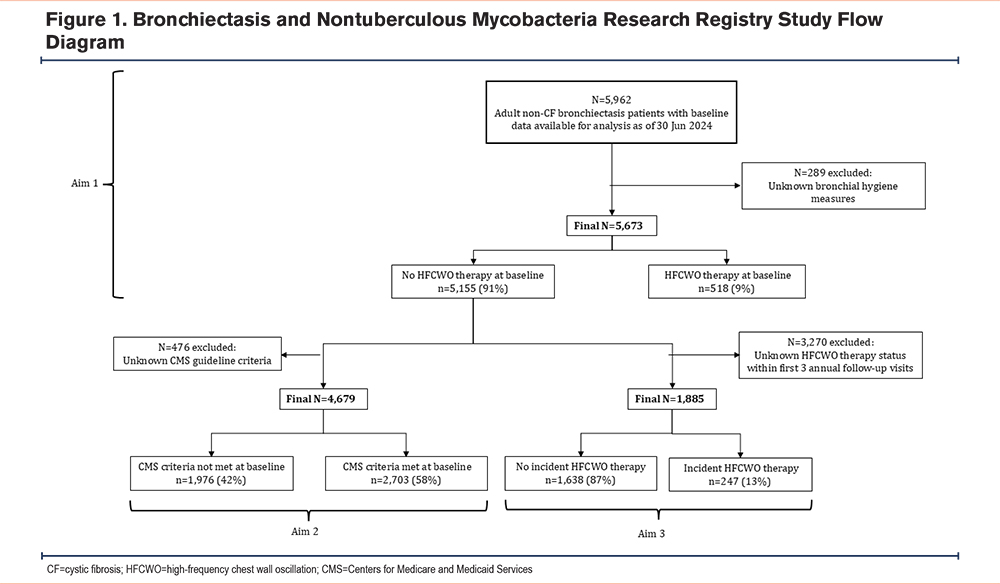
This retrospective, cross-sectional and longitudinal clinical data analysis evaluated BRR data collected between 2008 and 2025 from adult BE patients at baseline, defined as 2-years prior to enrollment, and annually thereafter (Figure 1).
Standardized data collection included demographics, past medical history, respiratory symptoms, and concomitant medication and therapies.15 The data coordinating center and each participating site received institutional review board approval and written informed consent was obtained from all BRR participants at participating institutions.
Study-Aim—Specific Methods
For Aim 1
Patients were grouped by those who did and did not use HFCWO therapy to improve bronchial hygiene during the baseline period. Associations were evaluated, including the following baseline demographics and clinical characteristics: age, sex, race, and co-existing conditions including asthma, chronic obstructive pulmonary disease (COPD), gastroesophageal reflux disease (GERD), primary ciliary dyskinesia (PCD), rheumatologic disease, allergic bronchopulmonary aspergillosis (ABPA), and nontuberculous mycobacteria (NTM). Concomitant NTM infection was defined based on the American Thoracic Society, Infectious Disease Society of America, European Society of Clinical Microbiology and Infectious Diseases, and European Respiratory Society guidelines for culture positivity and active treatment. Additional associations were evaluated for body mass index (continuous), prebronchodilator spirometry including forced vital capacity and forced expiratory volume in 1 second (FEV1) absolute and percentage predicted, exacerbation and hospitalization history, mBSI,16,17 bacterial culture isolation, defined as at least one positive culture during the baseline period, and respiratory symptoms, including presence of dyspnea, fatigue, cough, sputum volume among those with a productive cough, and hemoptysis. Associations with concomitant treatments and therapies were also evaluated including chronic-suppression antibiotic use (yes/no), inhaled bronchodilator use (yes/no), hypertonic saline use (yes/no), ACT use (yes/no), and inhaled and/or oral corticosteroid use (yes/no).
For Aim 2
Aim 1 patients with no HFCWO use at baseline were stratified into groups who did and did not meet selected CMS symptom/exacerbation criteria for HFCWO prescriptions. The selected CMS symptom/exacerbation criteria were defined as patients who reported a daily productive cough (defined as a usually productive cough among those experiencing regular bouts of coughing in the 2 years prior to enrollment) during the baseline period or who experienced more than 2 exacerbations per year during the baseline period. Associations with baseline demographics and clinical characteristics were the same as previously described for Aim 1.
For Aim 3
Aim 1 patients with no HFCWO use at baseline and with at least one year of follow-up over a 3-year period were evaluated for incident HFCWO therapy. These patients were grouped by those with and without incident HFCWO therapy during follow-up and evaluated for key clinical outcomes at follow-up, including lung function (FEV1 absolute and percentage predicted), reported exacerbations, treatment for exacerbations, pulmonary-related hospitalizations, and antibiotics for chronic suppression.
Statistical Analysis
For all 3 aims, differences between groups were compared using Wilcoxon-Mann-Whitney and independent 2-sample t-tests for continuous variables and Chi-square tests for categorical variables. All measures of association were evaluated using a significance level of 0.05, and no corrections for multiplicity were made. SAS version 9.4 (SAS Institute; Cary, North Carolina) was used for all analyses.
Results
Aim 1
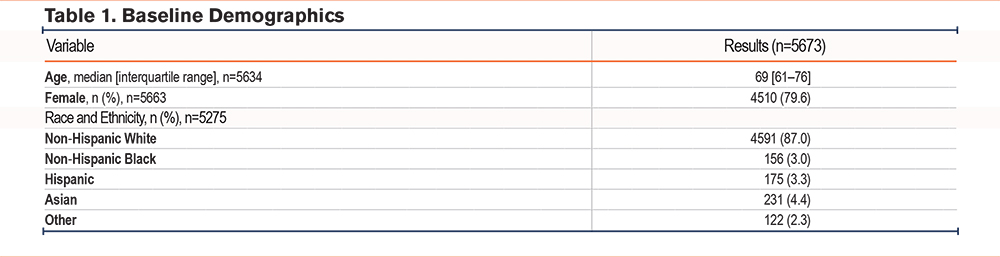
Cross-sectional BRR data were evaluated from 5673 adult patients who were 80% female and had a 69-year-old median age (Table 1).
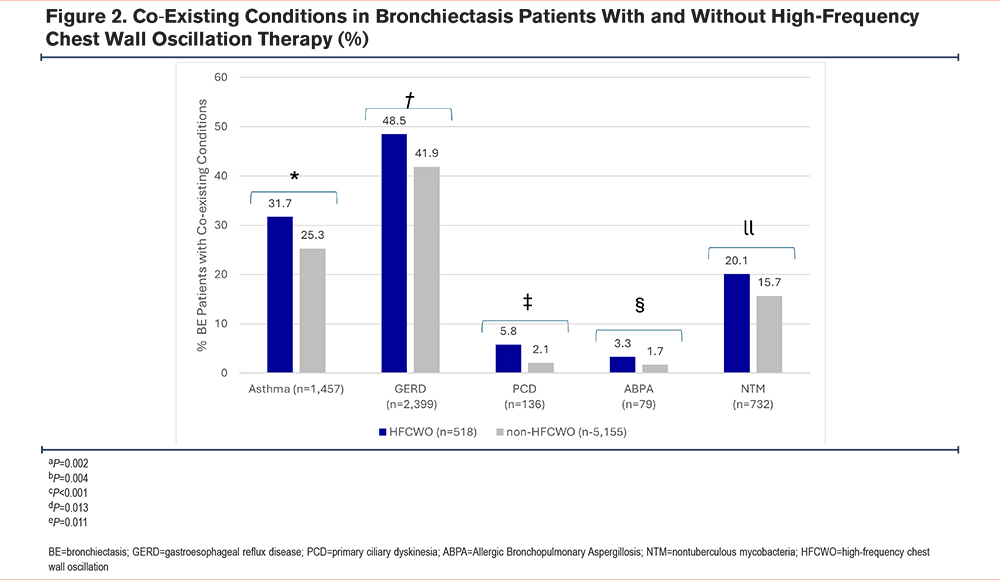
At baseline, HFCWO therapy was prescribed in 9.1% (518/5673) of BRR BE patients and these patients had greater proportions of common comorbidities with more severe disease characteristics than patients not prescribed HFCWO therapy. Compared to patients without prescribed HFCWO, BE patients prescribed HFCWO had increased incidence of asthma, GERD, PCD, ABPA, and NTM (Figure 2).
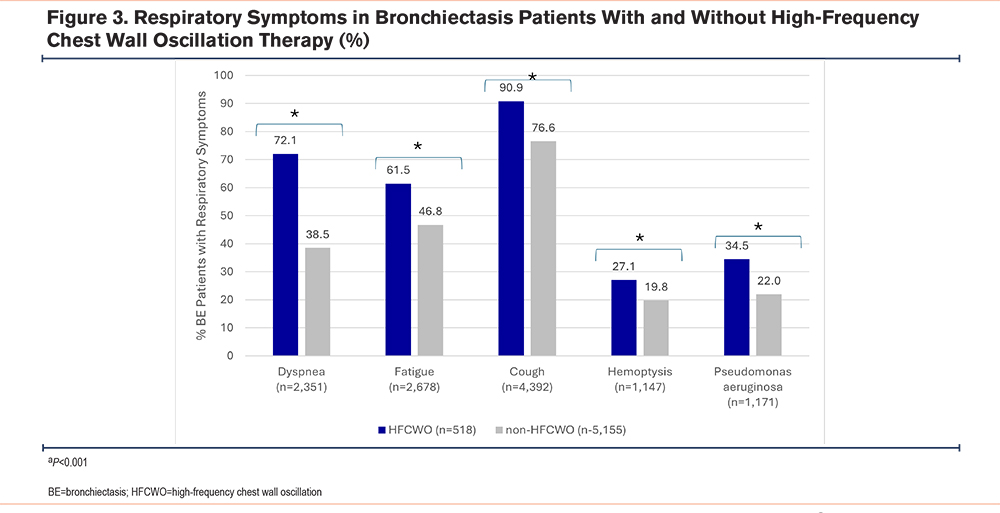
The cohort using prescribed HFCWO had more severe symptoms of disease with higher rates of dyspnea presence, fatigue, cough, hemoptysis, and positive cultures for Pseudomonas aeruginosa (Figure 3).
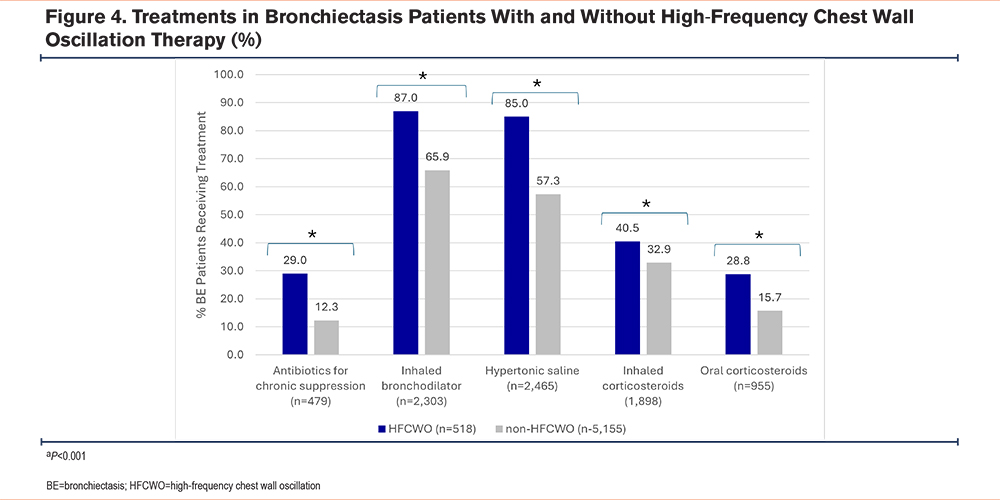
In addition, patients prescribed HFCWO at baseline were more likely to receive antibiotics, inhaled bronchodilators, hypertonic saline, inhaled corticosteroids, and oral corticosteroids (Figure 4).
In the 2 years before entry into the BRR, patients with HFCWO were more likely to experience exacerbations (67.5% versus 54.9%, P<0.001), were more often hospitalized for pulmonary-related causes (27.0% versus 18.4%, P<0.001), and had higher median mBSI scores (8 versus 7, P<0.001) than patients without HFCWO (Supplement 1 in the online supplement). Once enrolled in the BRR, 82.4% (427/518) were still using HFCWO while 12.9% (67/518) had stopped, and 4.6% (24/518) were unknown.
Aim 2
Most (58%, 2703/4679) patients without HFCWO prescriptions at baseline appeared to meet selected CMS symptom/exacerbation criteria for HFCWO therapy and these patients were more likely to have severe disease, similar to those receiving HFCWO at baseline (Supplement 2 in the online supplement). Specifically, patients without HFCWO prescriptions at baseline who appeared to meet selected CMS symptom/exacerbation criteria had higher rates of asthma (28.0% versus 21.3%, P<0.001), COPD (18.4% versus 13.5%, P<0.001), and PCD (2.4% versus 0.5%, P<0.001) than those who did not meet selected CMS symptom/exacerbation criteria.
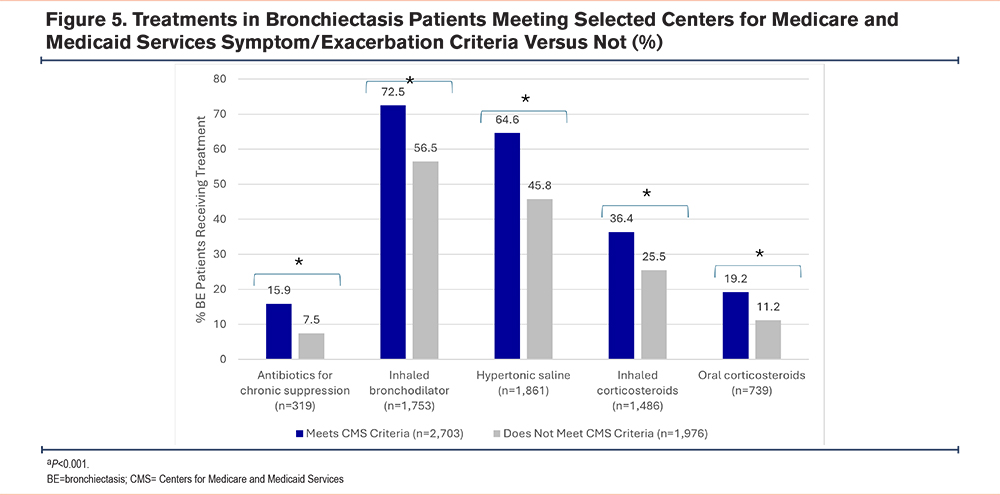
BE patients without HFCWO prescriptions at baseline who appeared to meet selected CMS symptom/exacerbation criteria were more likely to be treated for acute exacerbations (47.1% versus 27.1%, P<0.001), have pulmonary-related hospitalizations (21.2% versus 12.9%, P<0.001), and experience dyspnea (45.7% versus 31.3%, P<0.001), fatigue (52.4% versus 38.7%, P<0.001), hemoptysis (24.5% versus 13.3%, P<0.001), one or more positive cultures for Pseudomonas aeruginosa (27% versus 13.2%, P<0.001), and a higher mBSI score (7 versus 6, P<0.001) (Supplement 2 in the online supplement). Additionally, patients without HFCWO prescriptions at baseline who potentially met selected CMS symptom/exacerbation criteria for an HFCWO prescription had greater use of antibiotics, bronchodilators, hypertonic saline, inhaled corticosteroids, and oral corticosteroids (Figure 5).
For all BE patients with appropriate baseline and follow-up data available in the BRR within 3 years of baseline, HFCWO was prescribed to 12.9% (220/1709) without HFCWO prescriptions at baseline, including 14.0% (149/1064) who appeared to meet selected CMS symptom/exacerbation criteria and 11.0% (71/645) who did not meet selected CMS symptom/exacerbation criteria (P=0.073).
Aim 3
BE patients prescribed HFCWO during the follow-up within 3 years of baseline tended to be more unstable with higher rates of exacerbations (47.8% versus 28.1%, P<0.001), hospitalizations (20.5% versus 10.8%, P<0.001), and antibiotic users (27.6% versus 9.3%, P<0.001) (Supplement 3 in the online supplement).
Discussion
In the present study, HFCWO was used as a test case to understand ACT devices used in BE patient treatments. Only 9% (518 of 5673) of BE patients in the BRR were using HFCWO at baseline, even though 58% of patients not prescribed HFCWO at baseline appeared to meet selected CMS symptom/exacerbation criteria for HFCWO prescriptions and had more severe disease signs and symptoms than those who did not meet these selected CMS symptoms/exacerbation criteria for an HFCWO prescription. BE patients prescribed HFCWO and those who appeared to meet selected CMS symptom/exacerbation criteria for an HFCWO prescription were more likely to receive antibiotics, inhaled bronchodilators, hypertonic saline, inhaled corticosteroids, and oral corticosteroids; all signs of higher-burdened disease.
Recent evidence suggested HFCWO may be an effective ACT to reduce hospital stays, antibiotic uses, radiology exams, hospitalizations, exacerbations, symptoms, outpatient visits, and laboratory services,17 and HFCWO use presented few safety concerns.18,19 More research, clear practice guidelines, and provider education may be helpful to increase opportunities to improve BE patient symptoms. These symptom improvements may slow patient decline as worse respiratory symptoms are independently associated with exacerbation risk and BE disease progression.
We acknowledge the absence of well-defined practice guidelines for HFCWO prescriptions based on consistent and long-term data. One systematic review20 evaluated 7, small, low-quality studies using ACTs including HFCWO in 105 adults and children with BE and reported no significant difference in the number of exacerbations at 12 weeks (low-quality evidence); however, HFCWO treatment for 15 days significantly improved quality of life for both disease-specific and cough-related measures, reduced symptoms of breathlessness and cough, and improved sputum production as well as FEV1 compared to no treatment without any reported adverse events or any other safety concerns. Efforts are ongoing among regulatory agencies and health organizations to identify specific patients most likely to benefit from HFCWO therapy.21
Limitations of this study included the retrospective nature of this evaluation, lack of a randomized control arm, inability to quantify standard BE treatment failures as required for CMS qualification, and the potential selection bias where only a portion of all BE patients were perhaps selectively enrolled in the BRR database. Additionally, HFCWO utilization research using the BRR database was limited for several reasons. A given patient may not have started HFCWO use until the sixth or seventh year after their baseline enrollment, and patient follow-up data varied greatly. This study analyzed 518 HFCWO users at their baseline visit and 247 who started HFCWO use within 3 years after their baseline visit, and captured 76% (765/1003) of all HFCWO users in the BRR; however, the BRR included 238 additional patients who used HFCWO but were not included in this analysis. Also, HFCWO re-use data may be confounded because insurance companies typically require a 5-year wait period and an entirely new qualification before a patient can restart reimbursed HFCWO use. Of the 5962 BE patients included in this analysis with data available in the BRR database, 17% (1003/5962) reported ever having HFCWO therapy. This 17% overall HFCWO use was nearly double the 9% (518 of 5673) of BE patients who were using HFCWO at baseline for this study and may be a useful benchmark to assess HFCWO use changes over time.
This study was also limited because sites enrolling patients into the BRR were all academic medical centers with principal investigators who were leading experts in the field, creating financial and logistical barriers where perhaps only a subset of all BE patients could afford to receive this level of care. These medical centers may have better access and higher HFCWO utilization than the national average, which could suggest HFCWO prescribing practices were likely even lower across the United States than reported here. Another limitation potentially biasing the number of patients who met selected CMS symptom/exacerbation prescribing criteria but did not receive HFCWO could be patients who were offered but refused HFCWO treatment. Finally, utilization calculations were unable to distinguish between non-HFCWO patients receiving inadequate airway clearance and those receiving other ACT modalities, such as positive expiratory pressure, manual techniques, or other airway clearance strategies.
Relative sample sizes were small with the baseline HFCWO patient group (Aim 1) making up less than 10% (9.1%; 518/5673) and the follow-up group data (Aim 3) only a little more than a third (36.6%; 1885/5155). HFCWO status was unknown for more than half of the BRR patients (54.8%; 3270/5962), and the selected CMS symptom/exacerbation criteria status was unknown for nearly 10% (9.2%; 476/5155). In addition, symptom data collection, including daily productive cough, was subject to patient reporting accuracy and did not include details to determine if daily cough symptoms were experienced continuously for 6 months, as stipulated in the CMS criteria. Finally, no quality of life data were considered. Given the exploratory and hypothesis-generating nature of this analysis, we did not adjust for multiple comparisons, which increases our type I error rate and the possibility of chance findings.
Future research should evaluate outcomes for BE patients who met criteria to be started on HFCWO and were started on this, compared to patients who appeared to meet selected CMS symptom/exacerbation criteria for HFCWO prescriptions but were never started. Future ACT research studies should be done in larger BE patient populations and sub-groups over a longer term and should include independent datasets, quality of life measures, physician prescribing practices, BE treatment failures, barriers to access, real-world uses, adverse event rates (especially related to concomitant cardiac implantable electronic device uses), improved cough symptom measures over time, and longer-term health economic data. These new studies might even evaluate prospective, randomized, controlled, comparative data with patient-use decisions documenting why patients or their physicians might refuse to use or prescribe HFCWO, respectively.
Conclusions
In this cross-sectional, retrospective BRR analysis, BE patients prescribed HFCWO at baseline had more severe disease than BE patients not prescribed HFCWO therapy at baseline. Surprisingly, most BE patients in the BRR without an HFCWO prescription at baseline appeared to meet selected CMS symptom/exacerbation criteria for an HFCWO prescription and had similar baseline characteristics to patients already on HFCWO. These findings indicate that a clinically more severe BE patient population was offered HFCWO selectively, and our preliminary longitudinal analysis indicates only a small proportion (~13%) of BE patients were prescribed HFCWO over time, whether they appeared to meet selected CMS symptom/exacerbation criteria or not. These descriptive and hypothesis-generating results raise the question whether standardized BE management and clearer treatment guidelines may be helpful to drive better and more equitable patient health outcomes. Further, identifying BE patients receiving no adequate airway clearance, adding ACT and HFCWO adoption tracking to measure the percentage of baseline nonusers who later initiated therapy, and including HFCWO utilization across the entire BRR, could provide valuable context for further research into overall ACT and HFCWO use in the future to support effective BE management.
Acknowledgments
Author contributions: AEB and GMS were responsible for the conceptualization of the manuscript. GMS was responsible for the funding acquisition. AEB provided the formal analysis. AEB and GMS were in charge of the methodology, and AEB was in charge of the visualization. RC and CJR assisted in the writing. All authors reviewed and edited the manuscript.
Other acknowledgments: This work would not have been possible without the comprehensive chart reviews and recording of data by the dedicated research coordinators and PIs at each of the participating Registry sites. The authors would like to acknowledge Frestedt Incorporated for drafting and revising this manuscript and Christina Feir for helpful comments during manuscript review.
Declaration of Interest
AEB is a Bronchiectasis and Nontuberculous Mycobacteria Research Registry employee. CJR reports advisory board service for Insmed and France Foundation, clinical trials for Insmed, Vertex, Verona, and Mannkind, and grants from CFF. GMS received grants from Vertex, BiomX, AstraZeneca, Insmed, Electromed, Splisense, the National Institutes of Health, the COPD Foundation, and CFF. RC declares no relevant conflict of interest.