Running Head: Barriers to NIV Use for Hypercapnia From COPD
Funding Support: None
Date of Acceptance: September 22, 2026 | Published Online Date: September 30, 2026
Abbreviations: ABG=arterial blood gas; ATS=American Thoracic Society; BIPAP=bilevel positive airway pressure; CO2=carbon dioxide; COPD=chronic obstructive pulmonary disease; DME=durable medical equipment; ED=emergency department; EPAP=expiratory positive airway pressure; FEV1=forced expiratory volume in 1 second; GOLD=Global initiative for chronic Obstructive Lung Disease; HCO3=serum bicarbonate; IPAP=inspiratory positive airway pressure; NIV=noninvasive ventilation; OSA=obstructive sleep apnea; PaCO2=partial pressure of arterial carbon dioxide; PFTs=pulmonary function tests; PSG=polysomnogram; RT=respiratory therapist; SD=standard deviation; TCO2=transcutaneous carbon dioxide
Citation: Checinski PJ, Byrd KM, Labaki WW, Valley TS, Choi PJ, Viglianti EM. Clinician-perceived barriers and facilitators for initiation and management of noninvasive ventilation among patients with chronic hypercapnia from COPD: a qualitative study. Chronic Obstr Pulm Dis. 2026; 13(6): 489-499. doi: http://doi.org/10.15326/jcopdf.2026.0846
Online Supplemental Material: Read Online Supplemental Material (311KB)
Note: This work was presented as a poster presentation at the Chest Conference in October 2025.
Introduction
Chronic hypercapnia, which affects 25%–30% of patients with chronic obstructive pulmonary disease (COPD), is associated with worse long-term survival in this population.1-4 Elevated partial pressure of arterial carbon dioxide (PaCO2) levels, independent of pH, adversely affect the respiratory system by impairing innate immunity and reducing pulmonary edema resorption.5-8 Higher baseline body carbon dioxide (CO2) stores are associated with a more rapid rise in PaCO2 when minute ventilation acutely decreases.9 Moreover, higher chronic PaCO2—regardless of etiology, including COPD, obesity hypoventilation syndrome, neuromuscular disease, and thoracic cage abnormalities, is associated with an increased risk of all-cause mortality over 2 years.10
Long-term noninvasive ventilation (NIV) improves survival and decreases risk of readmission for patients with chronic hypercapnia from COPD when normalization or reduction of PaCO2 levels is targeted.11,12 The American Thoracic Society (ATS) recommends initiating NIV for patients with chronic stable hypercapnic COPD (forced expiratory volume in 1 second [FEV1] to forced vital capacity [FVC] < 0.70; resting PaCO2 > 45mmHg; not during an exacerbation) with the goal of PaCO2 normalization, without the use of polysomnogram (PSG), and advises against initiation during hospitalization for acute-on-chronic hypercapnic respiratory failure. Instead, NIV should be started 2–4 weeks after discharge if chronic hypercapnia persists.13 However, despite studies and professional societies recommending long-term NIV use, outpatient prescriptions of NIV for this patient population remains low.4,10 This may be contributed by lack of guidance from professional organizations, including ATS, on which patients with COPD would benefit from screening for chronic hypercapnia. The 2026 Global initiative for chronic Obstructive Lung Disease (GOLD) report recommended that an arterial blood gas (ABG) be obtained in the presence of peripheral oxygen saturations < 92% to confirm hypoxemia; however, the guidelines do not suggest which risk factors (lab values, symptoms, etc.) indicate the need for an ABG for suspected chronic hypercapnia.14
Although prior studies have identified barriers to COPD care, including patient-level factors, physician knowledge, patient-physician relationships, and access to care,15 barriers to managing chronic hypercapnia among patients with COPD have not been specifically studied. To understand the gap between guidelines and clinical practice in the management of chronic hypercapnia in patients with COPD, we interviewed pulmonary physicians about their outpatient screening practices, and initiation and management of NIV for patients with chronic hypercapnia from COPD.
Study Design and Methods
We conducted semistructured interviews with pulmonary physicians across the United States to explore barriers to screening and treatment of patients with chronic hypercapnia from COPD. We sought to interview pulmonary physicians who practiced in outpatient clinics and managed patients with COPD. The study was approved by the University of Michigan Institutional Review Board (HUM00243170) and followed the Consolidated Criteria for Reporting Qualitative Studies (Supplemental Appendix 1 in the online supplement).
Sample
Physicians were eligible if they completed pulmonary fellowship training and were actively practicing in the United States, involved in outpatient management of patients, and not affiliated with a large academic medical center, as to exclude physicians at centers where patients with chronic hypercapnia are commonly referred to ventilator clinics. A convenience sample of physicians was recruited using snowball sampling. Recruitment proceeded through an initial query of our pulmonary colleagues for potential participants, whom they previously trained or worked with. Physicians were subsequently recruited through email. Participants provided email contacts for additional potential participants. Recruitment and interviews were conducted from January 2024 to February 2025.
Semistructured Interviews
The interview guide was developed based on prior literature and study team expertise and focused on barriers and facilitators in screening, prescription, and management of NIV devices for hypercapnic patients. It was piloted with 2 pulmonary and critical care fellows to ensure completeness before being implemented (Supplemental Appendix 2 in the online supplement). PJChecinski conducted all interviews via Zoom. Interviews were audio-recorded, transcribed, and de-identified. PJChecinski reviewed all transcripts for accuracy. No incentive was provided to participants.
We obtained physician (e.g., years practicing postfellowship training and at current practice) and practice characteristics (e.g., presence and type of support staff) through demographic survey questions asked prior to initiation of the interview (Supplemental Appendix 3 in the online supplement). Demographic data was not obtained from nonparticipants due to nonresponse to email invitation for participation. Continuous variables were presented as means and standard deviations and categorical variables as counts and percentages.
Analysis
We used content analysis to analyze interviews using deductive codes derived from the interview guide and inductive codes that were identified as transcripts were analyzed.16 Two investigators (PJChecinski and KMB) with multidisciplinary backgrounds (pulmonary and critical care medicine and sociology) jointly coded each interview using MAXQDA24 (Berlin, Germany).17 MAXQDA24 was only used for line-by-line coding. PJChecinski and KMB met regularly to review each coded transcript, identify new codes, and clarify definitions. Disagreements in coding were resolved by discussion between PJChecinski, KMB, and EMV. Data collection and analysis were iterative with discussions to assess if thematic saturation was achieved, which we defined as no additional inductive themes being identified. Once thematic saturation was achieved, no additional participants were recruited. The codebook was developed after the third interview, and no new codes were added after the 13th interview. Prior interviews were re-coded to reflect the final codebook. Trustworthiness was enhanced through investigator triangulation, independent coding by multiple researchers, iterative team discussions to achieve consensus, and maintenance of an audit trail documenting analytic decisions.
Results
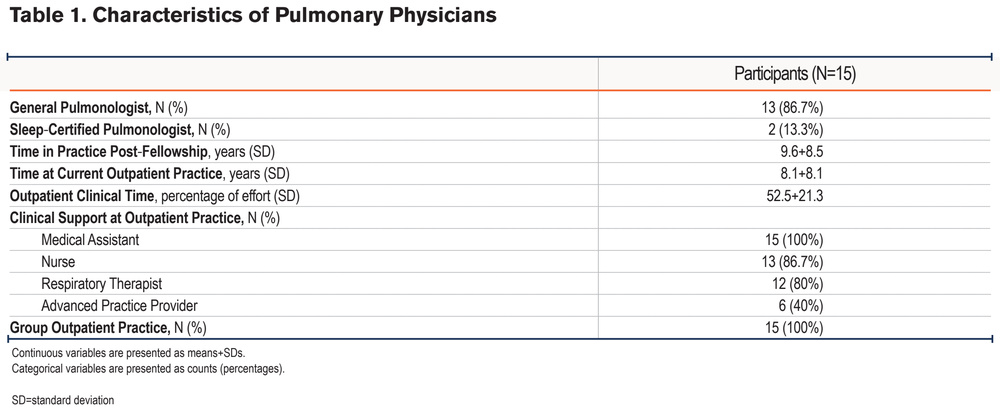
We interviewed 15 clinicians of which 86.7% (N=13) identified as general pulmonologists and two were sleep certified (Table 1). Physicians were in practice for an average of 9.6 years (standard deviation: 8.5) following pulmonary fellowship training and reported spending about half of their clinical time in outpatient care.
We inductively examined variation in how physicians screen, initiate, and manage NIV ventilation for patients with chronic hypercapnia from COPD. We then deductively identified 4 key barriers that influenced screening, initiation, and maintenance of NIV prescriptions for patients with chronic hypercapnia from COPD: patient factors, physician knowledge, clinical resources, and insurance logistics. Lastly, we asked physicians who were interviewed about potential solutions.
Screening Patients With COPD for Chronic Hypercapnia
Physicians used different data sources to identify patients with COPD who are high risk for hypercapnia (Table 2). Some physicians screened patients with prior hospitalizations or COPD exacerbations. Patient-reported symptoms influenced decision to screen, but there was no consensus on which specific symptoms necessitated screening. One physician recalled, “If people… give me more symptoms associated with dynamic hyperinflation where they're just really dyspneic. They can only walk like 10 feet and then they're out of breath and... give me more of an air trapping vibe...I tend to, maybe, think more about screening for hypercarbia” (Participant 9).
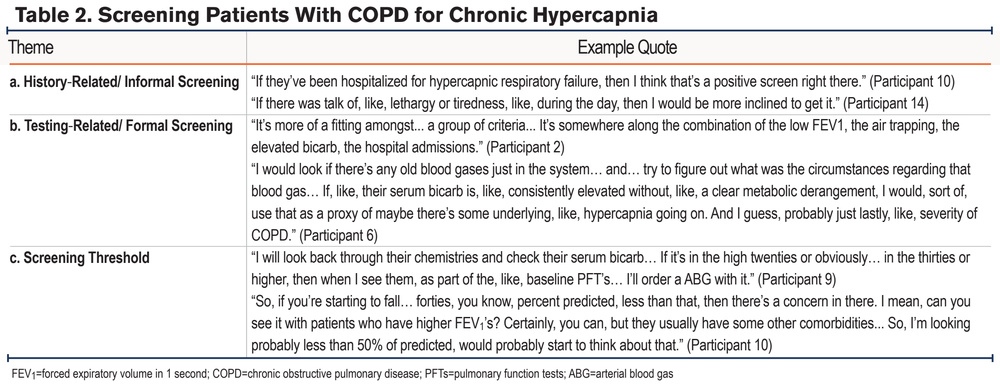
Physicians screened patients with an elevated serum bicarbonate (HCO3-) and/or severe airflow obstruction on their pulmonary function tests. Additionally, physicians looked for prior ABG results to guide the need for screening. Notably, there was no consensus on level of HCO3- or FEV1 percentage predicted that indicated the need to screen.
Noninvasive Ventilation Initiation for Chronic Hypercapnia in COPD
Pulmonary physicians prescribed NIV themselves when chronic hypercapnia was identified, but there was no consensus on type of device initiated, initial mode and settings chosen, and how initial settings were determined (Table 3). One physician shared, “if [the PSG] showed concerning features, and either sleep apnea or chronic hypercapnia, first do a titration or treatment polysomnogram to help us figure out what settings” (Participant 3). However, other physicians expressed having either a preferred range, a clinic order set with NIV settings, or they relied on settings from a patient’s hospitalization.
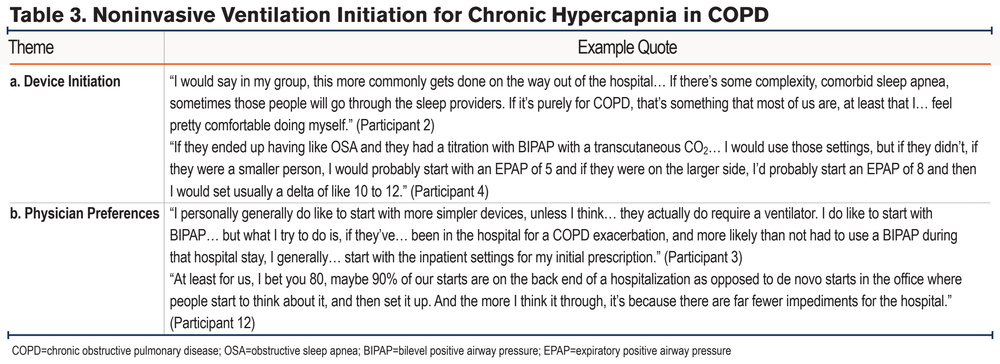
Physicians commonly initiated NIV at hospital discharge with some sharing preference for inpatient initiation. A physician shared that due to this patient population’s hyperinflation, they felt that “it's best done in the hospital...where you have [respiratory therapists (RTs)] who can fit the mask, and you can, like, make sure that they're doing well and get a blood gas in the morning” (Participant 4).
Noninvasive Ventilation Management for Chronic Hypercapnia in COPD
Once NIV was initiated, most physicians scheduled patients to follow-up within at least 3 months (Table 4). At these visits, improvement was largely quantified based off symptoms and need for recurrent hospitalization. It was uncommon to repeat an ABG after NIV initiation. One physician said, “I don't typically get another blood gas routinely, just to...prove that it's gone down” (Participant 6). Instead, physicians reviewed data downloads to assess usage and mask leak.
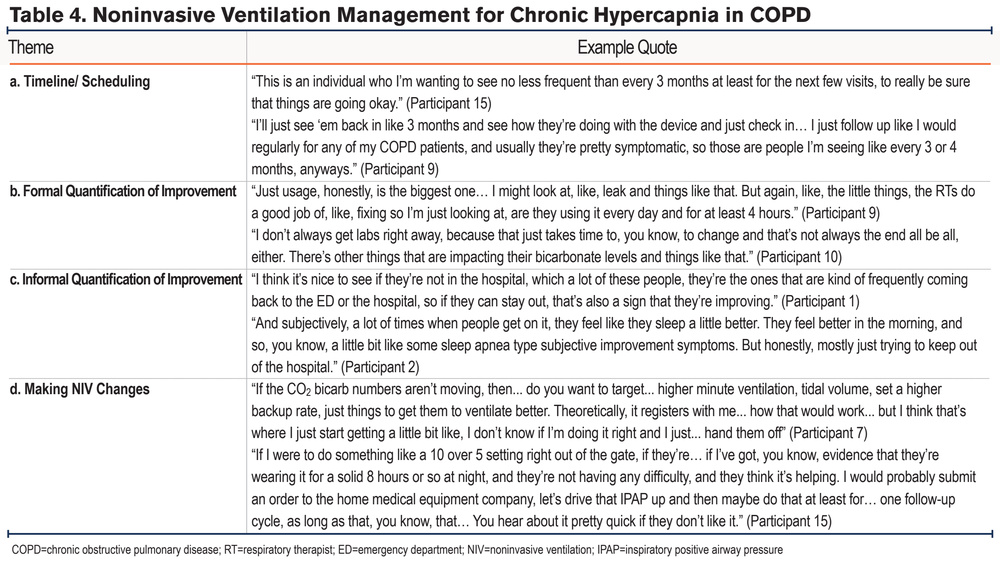
There was no consensus on why and how changes were made to initial NIV settings. Some physicians made changes based off data downloads, others repeated sleep titration studies, and others referred to a clinician with more expertise in NIV management. One physician explained, “if it looks like we're still maybe not where we need to be, sometimes I'll make some minor adjustments to the machine… If we've tweaked it a few times, and we're really struggling, then at that point, we need to get back in the lab and have a night to just completely titrate the patient” (Participant 10).
Barriers to Noninvasive Ventilation Use for Chronic Hypercapnia in COPD
Patient-level factors posed barriers, including disinterest, nonadherence, and difficulty in tolerating NIV therapy and obtaining required testing, such as ABG (Figure 1, Table 5). One physician expressed that “these are the folks who literally they don't leave their house until they're calling... the ambulance to go to the [emergency department] and you offer them to do outpatient testing and they fight it because it's difficult for them” (Participant 3).
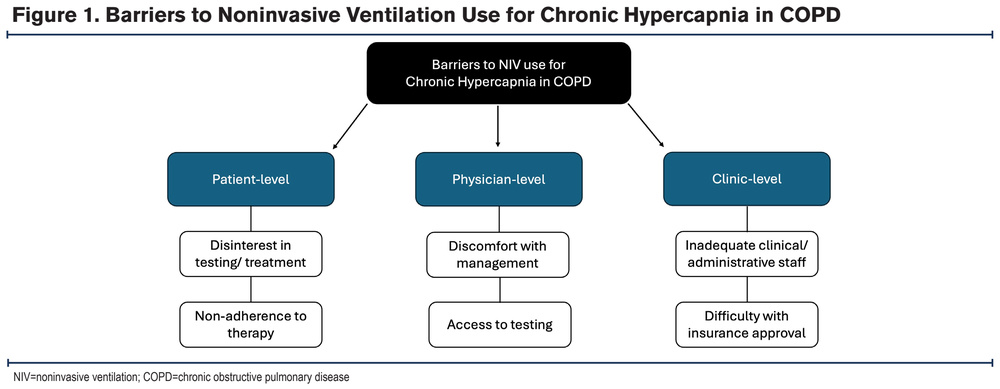
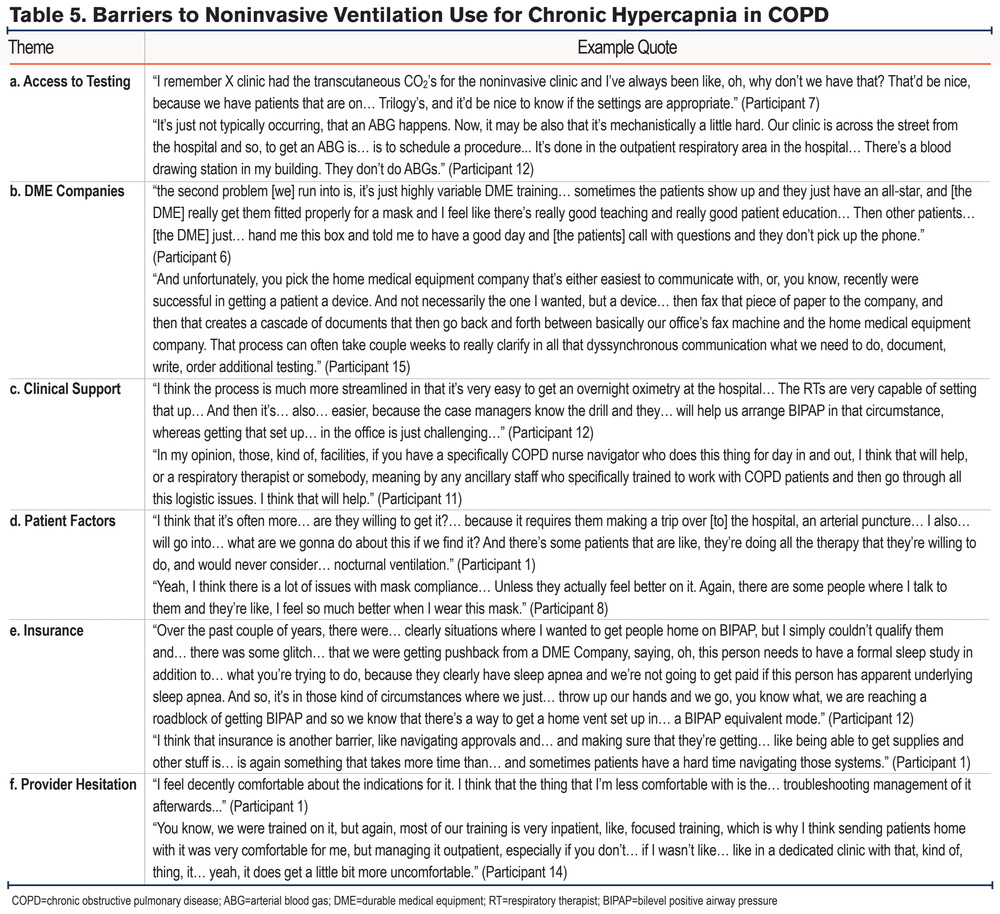
Physician-level barriers included discomfort with managing chronic hypercapnia and limited clinical resources (Figure 1, Table 5). Physicians described relying on others when patients struggled with NIV management, noting that “if something’s off with the follow-up, the patient’s struggling with the pressures…I’m pretty quick to hand that off to somebody” (Participant 7). Logistical constraints further limited care, particularly access to testing. As one participant noted, “[I] can send people down to get venous blood draws easily after their appointments versus an ABG can be done by the RTs in our clinic, but that requires a separate appointment” (Participant 2). Notably, no physicians reported access to outpatient transcutaneous CO2 (TCO2) monitoring, despite it being a useful noninvasive alternative for CO2 measurement with values that strongly correlate with arterial CO2 levels.18
Barriers at the clinic-level stemmed from inadequate clinical and administrative support (Figure 1, Table 5). As one physician shared, their clinic is “not a vent clinic… and there's not necessarily a dedicated RT… getting paid just to provide patient education… So, there's limited time for teaching” (Participant 6). Physicians relied on durable medical equipment (DME) companies, but some physicians had poor experiences because the companies sent technicians and not RTs who could assist in troubleshooting issues with the patient. Additionally, physicians struggled with insurance approvals for testing and preferred devices. One physician recalled, “there actually have been an increase in denials we've been getting from insurance companies about getting these devices… It's enough of a headache that it takes a pretty big signal for me to like start pursuing this in somebody that's not in the hospital” (Participant 2).
Solutions/Facilitators to Noninvasive Ventilation Use for Chronic Hypercapnia in COPD
Despite the many barriers physicians identified, they also proposed solutions. Physician-level solutions included improved access to necessary testing and assistance with identifying patients with COPD who needed screening for chronic hypercapnia (Table 6). For example, a physician felt “access to an ABG in the office, or at least a [venous blood gas] in the office” (Participant 12) would be helpful. Physicians also thought TCO2 monitors would be beneficial as another noninvasive adjunct to measure the patient’s hypercapnia in clinic. Additionally, they felt an electronic medical record alert could help facilitate care for this population, such as this physician described— “if it said like, hey, this patient had a [partial pressure of carbon dioxide] recently recorded greater than 52 or a serum bicarb of over, like, 32, consider NIV evaluation… I think that might actually get my attention. And then, if that same alert had a smart set link to it of NIV and the settings… It just kind of would streamline and remind you and reinforce how the workup goes” (Participant 7). Finally, education on data download interpretation or an algorithm for NIV troubleshooting were physician-level solutions that would facilitate care for this patient population. For example, a physician shared “the thing that I’m less comfortable with is the… troubleshooting management of it afterwards. Kind of, like we were talking about with the downloads” (Participant 1).
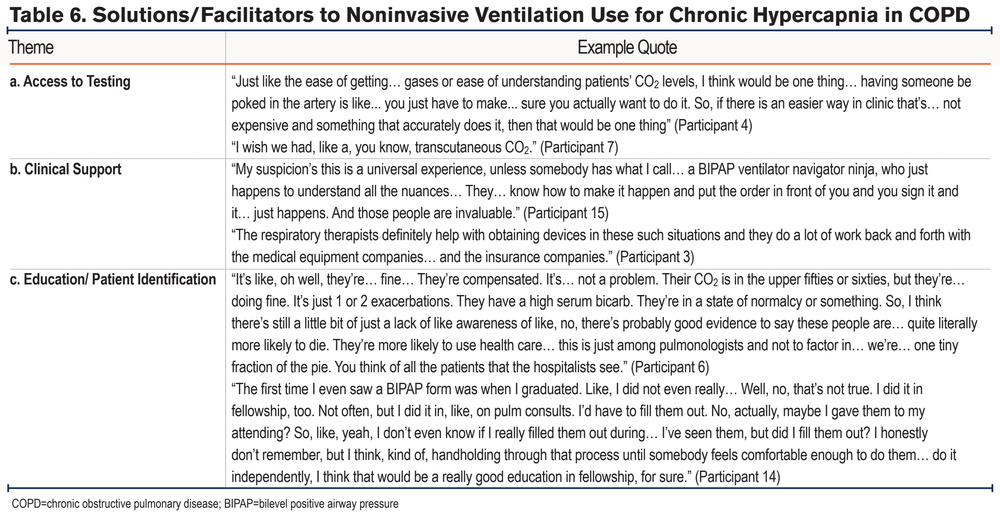
A clinic-level solution proposed was development of a protocol with the addition of clinical support, including RTs for NIV teaching and clinical staff for NIV insurance approval. One physician who already had nursing and RT support staff available expressed, “we could make it easier and better if we… came up with… a practice plan… we could have them come in and do teaching with the RT at our office… instead of having to worry or rely on the DME company who's variable” (Participant 4).
Discussion
We identified multiple barriers and targets for improving care and NIV prescription for patients with chronic hypercapnia due to COPD at the patient, physician, and clinical level. We found physicians varied in identifying patients with COPD for chronic hypercapnia screening, and limited access to testing further hindered diagnosis. Although NIV was generally initiated once patients were identified, practice often diverged from evidence with no consensus on device choice or initial settings. Insurance barriers and insufficient clinical support, particularly from RTs, increased reliance on variable-quality DME companies. Patient nonadherance and disengagement further challenged care delivery.
Relationship to Prior Studies
Prior studies demonstrated that NIV prolongs the time to hospital readmission or death in patients with COPD who remain hypercapnic 2–4 weeks after an acute hypercapnic exacerbation when PaCO2 level reduction is targeted.11,12 This mortality benefit was not seen when NIV was initiated for patients with COPD who were persistently hypercapnic during an active admission for acute hypercapnic respiratory failure.19 Despite this evidence, many patients who would benefit from NIV are not receiving it.4,10 Our study builds on this work and begins to highlight the barriers to implementing NIV for patients with chronic hypercapnia from COPD which encompass patient, physician, and clinic level barriers. For example, improving clinician knowledge on who to screen and when to initiate NIV treatments—both of which have evidence-guidance—by creating electronic screening tools or order sets may help to overcome this barrier.13,20
Implications
Our study implies that there are multiple levels of barriers that are preventing the optimal care of patients with chronic hypercapnia from COPD. Broadly, patients require education of the importance of NIV use and assistance in troubleshooting equipment issues so that they find the devices tolerable. However, this requires physicians to be knowledgeable in how to identify patients at highest risk, be comfortable in managing and troubleshooting these devices with the patients, and have the time to do both while working with insurance companies to obtain approvals. While electronic medical record alerts and decisional support algorithms may help clinicians, additional resources will be needed to optimize use of NIV. Physicians need improved access to necessary testing and support from clinic staff. Clinical support, such as a qualified RT, is crucial in the care of this patient population both in assisting with device approval, navigating DME services, patient device education, and troubleshooting devices and patient discomfort.
We found that it was uncommon for physicians to evaluate post-treatment PaCO2 levels. Patients may not be attaining mortality benefit from NIV if PaCO2 levels remain elevated without appropriate changes to NIV settings. Lack of repeat testing could be secondary to difficulties in obtaining ABG’s in the outpatient setting and patient disinterest in testing as shared by physicians in our study. Outpatient practices could consider surrogate measures of PaCO2, such as TCO2 monitors, as they are convenient and noninvasive. A study of patients treated with NIV for chronic hypercapnic respiratory failure found that daytime PaCO2 levels strongly correlated with TCO2 values, with no difference in values exceeding 7.5mmHg.18 All the physicians interviewed shared that TCO2 monitors would be helpful in their clinical practice, but none had access to them.
Our study also infers that many pulmonary physicians are uncomfortable with NIV management, especially after initiation, and that differences in practices may be related to varying recommendations available to physicians. UpToDate, a commonly used tool by providers, shares a differing opinion from ATS, recommending NIV initiation in a monitored setting, such as a sleep laboratory.21 We believe variability in fellowship training on home NIV management contributes to the knowledge gaps described and is compounded by difficulty navigating insurance coverage algorithms, the rapid expansion in NIV technology and their indications, and detailed education needed to address patient nonadherence to NIV. Given this, we question whether all pulmonologists should be prescribing and managing NIV for their patients with COPD. Some experts in the field argue that dedicated training in chronic respiratory failure, combining pulmonary, critical care, and sleep medicine education, is required to effectively manage these patients and the depth of knowledge required falls out of the scope of general pulmonary and critical care training.22 Other experts have proposed ways to improve NIV education of fellows in pulmonary and critical care programs through a blended model of online and in-person hands on NIV instruction, which showed improvement in NIV knowledge and confidence in management in a small group of fellows.23 The appropriate approach is unknown. However, given the mortality of COPD and prevalence of hypercapnia, expertise is needed in managing these patients.
Many physicians shared that insurance was a barrier to care, specifically the difficulty of following insurance algorithms and the need for additional testing for device approval. The Centers for Medicare & Medicaid Services recently revised their reimbursement guidelines for treatment of chronic hypercapnia related to COPD, now providing separate coverage requirements for authorization of a respiratory assist device with or without a back-up rate and a home mechanical ventilator in the outpatient and inpatient setting, removing need for overnight pulse oximetry for approval, and adding 6-month requalification requirements. However, despite these recent changes, these guidelines remain complex and challenging for general pulmonologists to navigate.
Lastly, many physicians preferred initiation of home NIV in the hospital as compared to initiation in the clinic, which opposes the recommendation by ATS. Recent literature argues that delaying NIV initiation to clinic follow-up could leave this patient population susceptible to hospital readmission and opportunities for better patient NIV education could be missed.24 Additionally, a recent study using claims data found that early NIV initiation for chronic hypercapnia in COPD was associated with a reduced risk of death and decreased Medicare expenditures over the next year.25 A barrier experienced by some participants included difficulty starting BIPAP on discharge and needing to send patients home with more expensive ventilators. This is an additional challenge that needs to be addressed and could potentially be improved by the recent revisions in reimbursement guidelines made by the Centers for Medicare & Medicaid Services.
Our study has several strengths. First, we obtained perspectives from pulmonary physicians from various clinical practices across the United States, reaching thematic saturation. Second, our study is the first to explore the barriers faced by physicians in managing chronic hypercapnia in COPD and uncovers potential targets for improvement and future research. However, there are also several limitations to our study. First, participants may have shared what they ideally would have done and not what they do in clinical practice (observer-expectancy effect). Additionally, we interviewed a convenience sample of physicians and excluded physicians at academic centers so our findings may not represent all pulmonary providers’ practice patterns. Also, some findings are limited to physician practice in the United States as the barriers identified are dependent on the U.S. health care system. Demographic data were not available for nonparticipants, limiting our ability to assess differences from participants. However, nonparticipants were similarly not affiliated with large academic centers, suggesting they may have represented comparable practice settings.
Conclusion
Pulmonary physicians vary in their approaches to screening and management of chronic hypercapnia in patients with COPD, and there is a discordance between practice patterns described and research evidence. Screening guidance for at-risk individuals and a NIV treatment algorithm could help general pulmonologists in caring for this patient cohort. Additional solutions include improved physician education, better outpatient clinical support, access to necessary testing, and streamlined algorithms for NIV approval.
Acknowledgements
Author contributions: PJChecinski’s roles included conceptualization, methodology, investigation, formal analysis, and writing of the original draft. KMB was involved in formal analysis and review and editing of the original draft. WWL was involved in reviewing and editing the original draft. TSV, PJChoi, and EMV were each involved in supervision, conceptualization, methodology, and review and editing of the original draft. All authors approved the final manuscript submitted for publication.
Data sharing statement: The codebook will be available upon reasonable request following publication of the manuscript.
Declaration of Interest
WWL reports consulting fees from Inogen and Verona. PJChoi reports advisory fees from Breas Medical, Philips Respironics, and Sentec, Inc. All other authors declare no conflicts of interest.