Running Head: Nighttime Symptom Burden in COPD
Funding Support: This study was funded by AstraZeneca.
Date of Acceptance: October 16, 2026 | Published Online Date: October 20, 2026
Abbreviations: ADLs=activities of daily living; CASIS=COPD and Asthma Sleep Impact Scale; CAT=COPD Assessment Test; COD=confirmation of diagnosis; COPD=chronic obstructive pulmonary disease; CPAP=continuous positive airway pressure; FRAIL=Fatigue-Resistance- Ambulation-Illnesses-Loss of weight; GOLD=Global initiative for chronic Obstructive Lung Disease; GR=group; HCl=hydrochloride; ICS=inhaled corticosteroid; LABA=long-acting beta2-agonist; LAMA=long-acting muscarinic antagonist; Q1=first quartile; Q3=third quartile; SD=standard deviation; SMT=Symptom Management Theory
Citation: Miller S, Germack HD, Bell M, et al. Nighttime symptom burden in chronic obstructive pulmonary disease: a qualitative study. Chronic Obstr Pulm Dis. 2026; 13(6): 500-512. doi: http://doi.org/10.15326/jcopdf.2026.0780
Online Supplemental Material: Read Online Supplemental Material (305KB)
Introduction
Chronic obstructive pulmonary disease (COPD), the fifth leading cause of death in 2023, imposes a substantial population burden in the United States, with an estimated 11 million individuals affected.1,2 COPD is often associated with significant symptom burden, including ongoing dyspnea, chronic cough, mucus production, dry mouth, fatigue, pain, depression, and anxiety.3,4 Symptoms have been reported as most problematic in the morning and have an impact on daily activities.5
Nighttime symptoms (including early morning symptoms) are a clinically significant yet understudied aspect of COPD.6-8 COPD nighttime symptoms involve a complex interaction of perception, management behaviors, and consequent outcomes. Nighttime symptoms contribute to poor sleep quality, which can include difficulty falling asleep, frequent awakenings, and insomnia. One study estimated the prevalence of poor subjective sleep quality to be 55% in patients with moderate to severe COPD.9 Poor sleep quality in turn worsens COPD burden, including daytime fatigue, reduced physical/mental functioning, and diminished quality of life.9-16 As such, the Global initiative for chronic Obstructive Lung Disease (GOLD) report recommends assessing symptoms, including sleep disturbance and insomnia, at each routine COPD visit.17
To inform clinical practice and improve patient outcomes, it is essential to understand nighttime symptom experience, the burden of nighttime symptoms in patients with COPD, and strategies for managing nighttime symptoms. Inhaled triple therapy (inhaled corticosteroid [ICS]/long-acting beta2-agonist [LABA]/long-acting muscarinic antagonist [LAMA]) is a recommended maintenance treatment for patients with a history of COPD exacerbations. In clinical trials, triple therapy has been shown to improve lung function, reduce exacerbations, and enhance quality of life compared with LAMA alone, LABA/LAMA, or ICS/LABA.17-21 With COPD symptoms often persisting despite medical management,3 the extended therapeutic coverage of twice-daily therapies including the second peak in lung function with the evening dose may offer improved control of nighttime symptoms. The purpose of this study was to investigate how patients on single-inhaler dual or triple therapy and once-daily or twice-daily dosing perceive and manage nighttime symptoms associated with COPD.
Materials and Methods
Ethics Approval and Informed Consent
The study protocol was reviewed and approved as exempt by the Pearl Institutional Review Board before study procedures commenced. The study adhered to all applicable local regulations and good research practices. Each participant was provided with an informed consent form prior to their interview.
Methodology
The University of California-San Francisco’s Symptom Management Theory (SMT)22 served as the theoretical framework for this study. The SMT is essential for understanding individuals’ symptom experiences, which comprise 3 components that interact simultaneously: symptom experience, management strategies, and outcomes. Symptom experience includes the individual perception and evaluation of the symptoms. Symptom management strategies are techniques aimed at preventing or mitigating the symptom experience, and symptom outcomes are the result of these strategies and experiences. While symptom experience was the primary focus of our study, we also examined the relational factors associated with symptom management strategies and outcomes.
Semistructured interviews (see the online supplement for the interview guide) used open-ended questions to explore several key topics, including the following: the frequency and severity of nighttime symptoms (including early morning symptoms), the impact of symptoms on daily life and sleep, coping techniques and strategies used for symptoms, potential perceived burden or benefit associated with taking a second daily dose of medication (if applicable), perception and efficacy of evening dosing in nighttime symptom alleviation, and the use of rescue medication before going to bed at night.
Sociodemographic and clinical data, including current medication use, the COPD Assessment Test (CAT),23 the COPD and Asthma Sleep Impact Scale (CASIS),12 and questions to assess frailty status (using the Fatigue-Resistance-Ambulation-Illnesses-Loss of weight [FRAIL] questionnaire24) were collected. Four investigators experienced in qualitative research conducted the interviews, with only the participant and the interviewer present. Interviews were conducted between March 11 and May 7, 2025. The interviews lasted approximately 60 minutes. Participants were compensated with $125 U.S. dollars for their time. All interviews were audio recorded through Zoom, transcribed verbatim, and de-identified to remove personally identifiable information.
Study Population
Thirty U.S. adults with a physician-confirmed diagnosis of COPD participated in this study. All participants reported moderate or high symptom burden (CAT score ≥10),23 with no severe exacerbations resulting in hospitalizations or emergency department visits in the past year. A CAT score of ≥10 was required to ensure that participants had a clinically meaningful COPD symptom burden and were able to provide relevant experiential insight into the effects and management of nighttime symptoms. There were 10 patients in each of the following groups: single-inhaler once-daily triple therapy (“group[GR]1”), single-inhaler twice-daily triple therapy (“GR2"), and single-inhaler dual maintenance therapy (“GR3”).
To qualify, patients needed to reside in the United States, have a confirmed diagnosis of COPD, be on single-inhaler triple therapy or on single-inhaler dual therapy as their maintenance treatment, and have at least 2 fills of their COPD maintenance therapy (or evidence of use for 60 days). Exclusion criteria included multi-inhaler (“open”) maintenance therapy, taking ensifentrine nebulizer as maintenance therapy for COPD, taking a biologic treatment for COPD, having a diagnosis of lung cancer, asthma, or interstitial lung disease, or having a history of a lung transplant. The study was designed to examine experiences among patients receiving single-inhaler maintenance therapy, including experiences associated with once- versus twice-daily dosing. Patients receiving open triple therapy were, therefore, excluded to avoid conflating dosing experiences with the burden of managing multiple inhalers. Patients receiving single bronchodilator therapy were excluded because the study focused on patients with persistent symptom burden despite dual or triple maintenance therapy. Patients receiving ensifentrine were excluded to maintain a sample receiving established inhaled dual or triple maintenance regimens.
Patients unable to complete the interview due to language difficulties or cognitive impairment, as well as those with a lack of reliable internet access, were also excluded from the study. Participants were recruited primarily through a recruiter panel of nurse navigators and other nurses working in pulmonary and primary care settings. Recruitment also took place through a patient advocacy group (Pillar Patient Advocates).
Analysis
Interviews were analyzed by 3 researchers using a hybrid coding approach that began with deductive codes informed by the interview guide while remaining open to inductive codes that emerged during analysis. When new codes emerged from the interviews, they were added to the coding framework as part of the inductive process. Following the development of the preliminary coding dictionary, the research team prepared the first 2 transcripts for coding. An agreement of 84% was established, after which an intercoder agreement assessment was conducted using dual coding and reconciliation; minor coding discrepancies were discussed and resolved through consensus. The coders subsequently proceeded independently using the finalized coding dictionary. The analysis software used was Atlas.ti version 25 (ATLAS.ti GmbH; Berlin, Germany), with code frequency tabulated in R version 4.3 (The R Foundation; Vienna, Austria).
Results
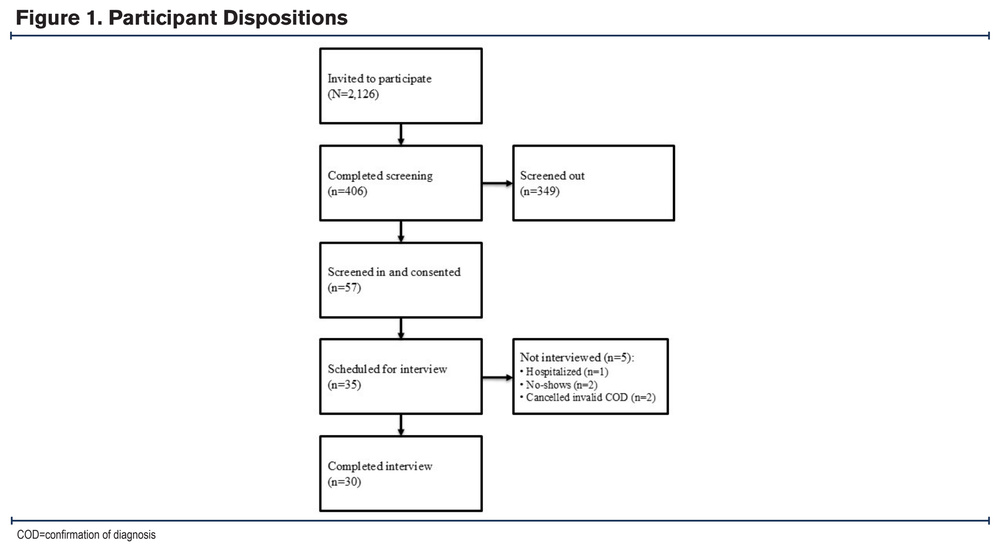
A total of 2126 patients were invited to participate in the qualitative interviews. Of these, 406 patients completed the screening process, with 349 excluded. Fifty-seven patients met eligibility criteria and consented to participate. Thirty-five patients were scheduled for interviews, of whom 30 participated and completed the interview (Figure 1).
Patient Characteristics
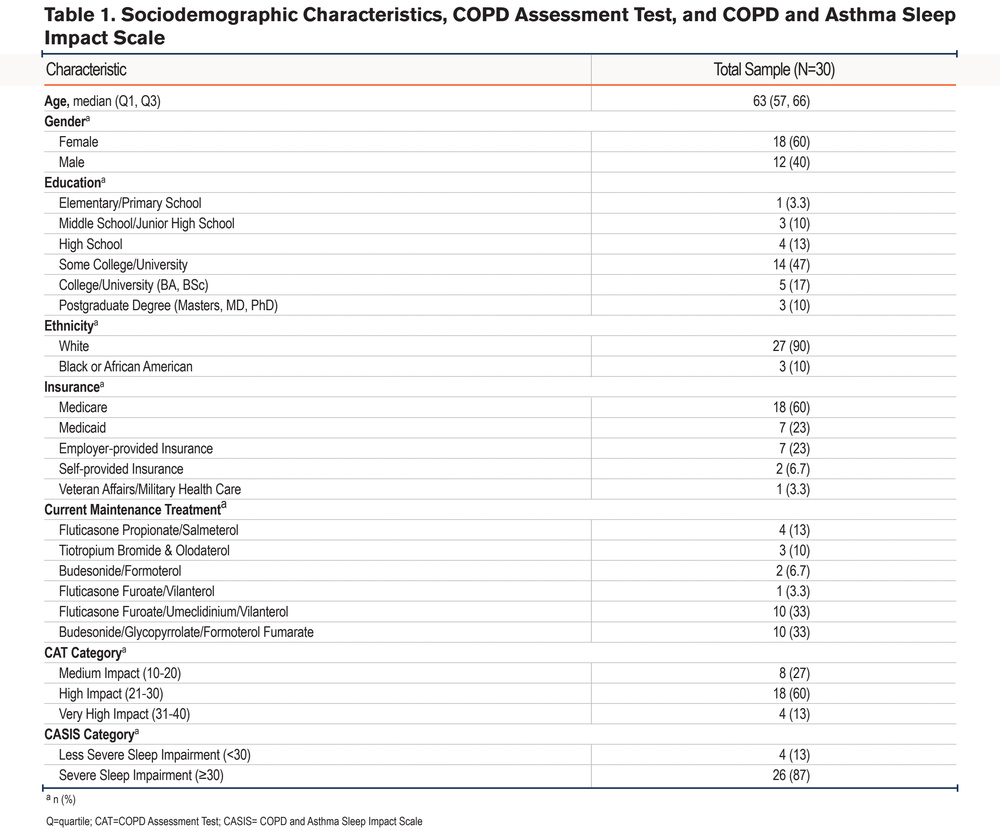
Participants had a median age of 63 years; 60% were female, and 90% were White. Education varied, with nearly half having some college or university experience (47%). Insurance coverage varied, with the majority insured by Medicare (60%). Two-thirds of participants were receiving single-inhaler triple therapy, split evenly between fluticasone furoate/umeclidinium/vilanterol and budesonide/glycopyrrolate/formoterol fumarate (33% each). The remaining participants were receiving single-inhaler dual maintenance therapy, most commonly fluticasone propionate/salmeterol (13%), followed by tiotropium bromide and olodaterol (10%), budesonide/formoterol (6.7%), and fluticasone furoate/vilanterol (3.3%).
Detailed sociodemographic and clinical characteristics are presented in Table 1. The majority (87%) were severely impacted by nighttime symptoms and sleep disruption, as measured with CASIS. Based on established thresholds, severe sleep impairment was defined as a total CASIS score of ≥30. Participants differed in COPD severity, with most reporting high (21–30) or very high (31–40) impact on the CAT patient-reported outcome (73%).
Qualitative Findings
Thematic analysis of the 30 interviews revealed 3 key themes aligned with the 3 components of the SMT: a high nighttime symptom burden, wide-ranging outcomes from nighttime symptoms, and various symptom management strategies.
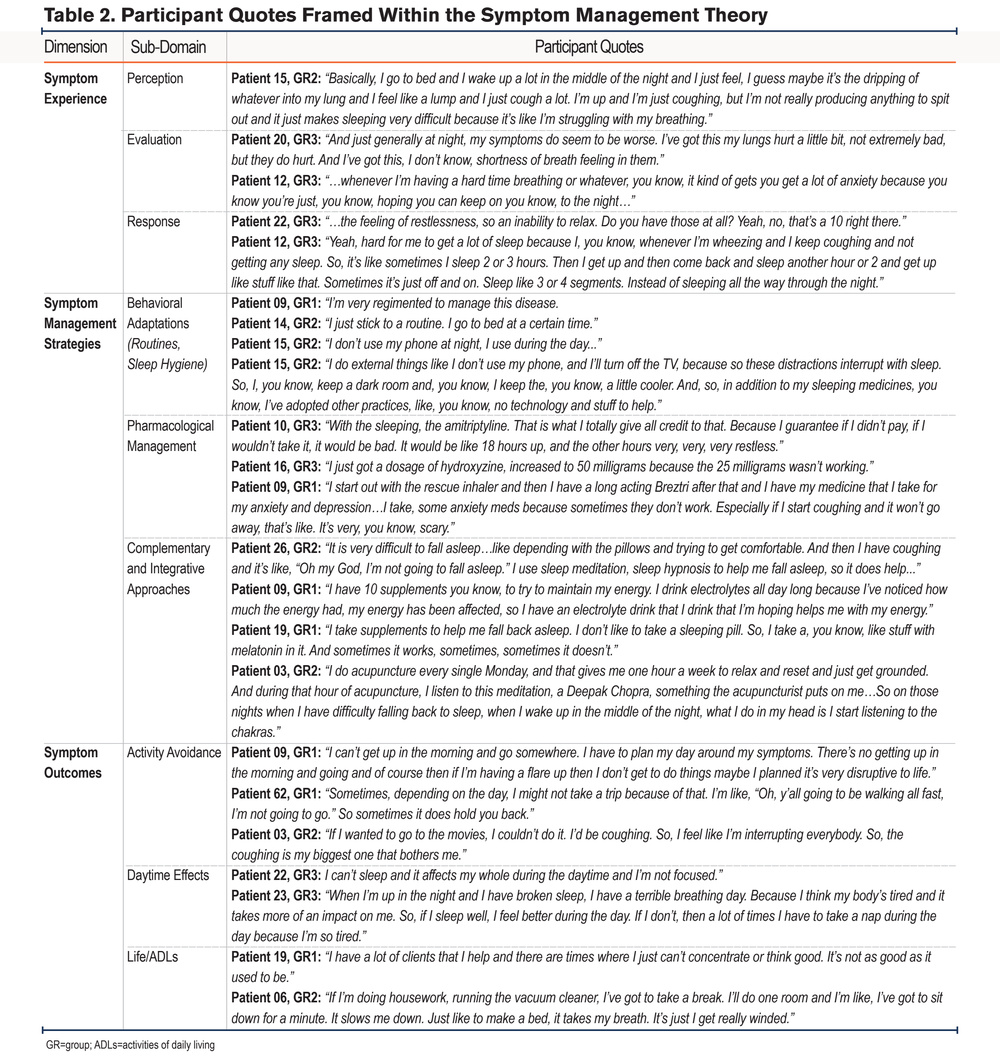
Table 2 presents a structured summary of participant quotes organized according to the 3 primary components of the SMT, highlighting the movement from perception and evaluation of symptoms to concrete management behaviors, and finally, to the physical, emotional, and functional consequences reported by participants. The following sections describe the main findings, organized by key dimensions of the SMT.
Main Findings - Nighttime Symptom Experience
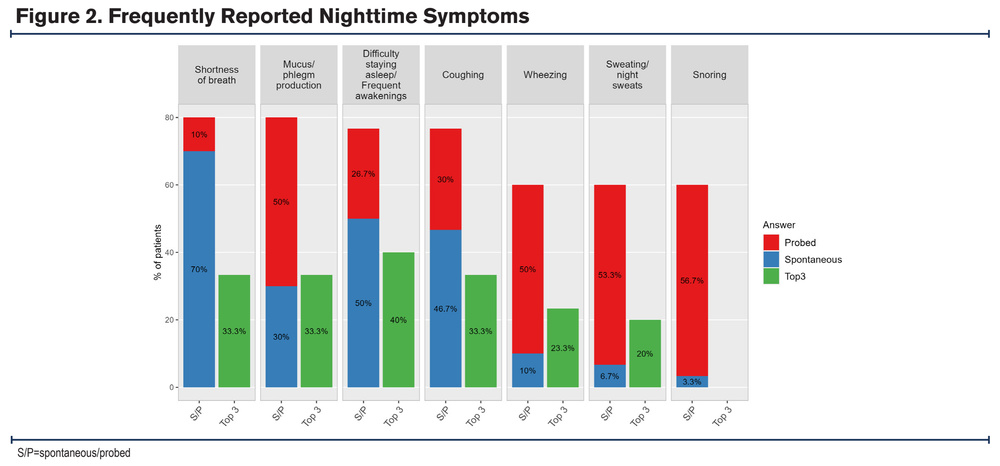
The most frequently reported nighttime symptoms, as shown in Figure 2, were shortness of breath (80%), mucus/phlegm production (80%), coughing (77%), and difficulty staying asleep or experiencing frequent awakenings (77%). Wheezing, sweating or night sweats, and snoring were each reported by 60% of participants.
- Patient 15, GR2: “I'm up and I'm just coughing, but I'm not really producing anything to spit out, and it just makes sleeping very difficult because it's like I'm struggling with my breathing.”
- Patient 12, GR3: “Yeah, hard for me to get a lot of sleep because I, you know, whenever I'm wheezing and I keep coughing and not getting any sleep.
When asked about the top 3 most bothersome symptoms, participants most often identified difficulty staying asleep or frequent awakenings (40%), followed by shortness of breath (33%), mucus/phlegm production (33%), and coughing (33%). Wheezing and sweating or night sweats were less frequently ranked among the top 3 most bothersome, and snoring was not identified as a top concern by any participant.
- Patient 26, GR2: “Well, I would say the wakefulness is more bothersome because it makes my day... I mean, I don't want to have no energy to do nothing through the day.”
- Patient 19, GR1: “I think it's staying asleep. Falling asleep is not always an issue because I'm so exhausted from getting up from the night before that I can't really. You know, I'm kind of tired, so I will fall asleep.”
Main Findings - Nighttime Symptoms Outcomes
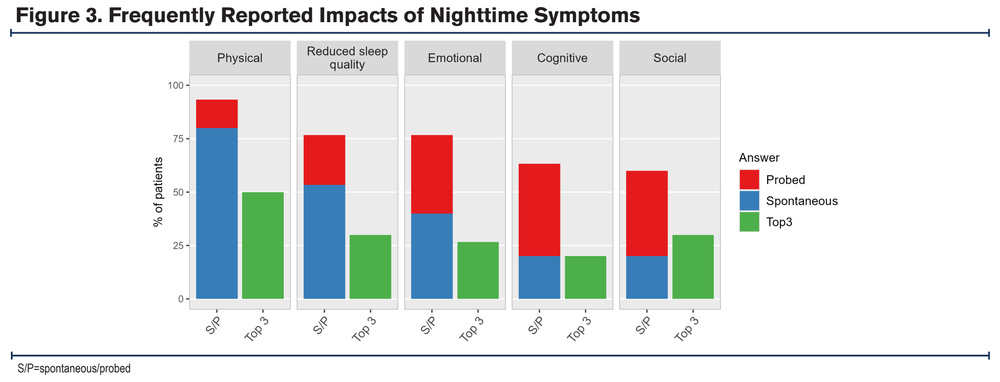
Nighttime symptoms were reported to have wide-ranging impacts (see Figure 3). Physical impacts were the most frequently reported consequence of nighttime symptoms. Nearly all participants (93%) reported experiencing physical effects, and these were most often mentioned spontaneously (80%) without probing.
- Patient 06, GR2: “It affects me because if I'm doing housework, running the vacuum cleaner, I've got to take a break. I'll do one room and I'm like, I've got to sit down for a minute. It slows me down. Just like to make a bed, it takes my breath. It's just I get really winded.”
- Patient 23, GR3: “When I'm up in the night and I have broken sleep, I have a terrible breathing day. Because I think my body's tired and it takes more of an impact on me. So, if I sleep well, I feel better during the day. If I don't, then a lot of times I have to take a nap during the day because I'm so tired.”
- Patient 59, GR1: “The fatigue. And it kind of all runs together because I don't think if I wasn't so fatigued, I wouldn't be so snappy.”
Emotional (77%), reduced sleep quality (77%), cognitive (63%), and social impacts (60%) were also frequently reported. Emotional impacts were evenly split between spontaneous and probed reporting, while cognitive and social impacts were more commonly identified following probing. Anxiety was the most frequently reported emotional impact, affecting 78% of participants who described emotional consequences.
- Patient 03, GR2: “…when I get the anxiety or anxious feeling, that's bothersome, because I feel like I'm lost. Okay. And anxiety, is it at nighttime as well? Well, it starts in the afternoon.
- Patient 12, GR3: “When I'm having a hard time breathing or whatever, you know, it kind of gets you get a lot of anxiety, hoping you can keep on you know, to the night and get by through everything and stuff and everything.”
- Patient 12; GR3: I was struggling to breathe. I was having to write things on paper for my wife, because I couldn't even talk.”
When participants ranked the most bothersome impacts, physical impacts were selected most often, identified by 50% of participants. Reduced sleep quality and social impacts were both ranked among the top 3 most bothersome (30% each), and emotional impacts were reported as the most bothersome by 27% of the participants.
Main Findings – Nighttime Symptom Management Strategies
Participants reported a combination of behavioral adaptations, complementary and integrative approaches, and pharmacological symptom management strategies (Table 3).
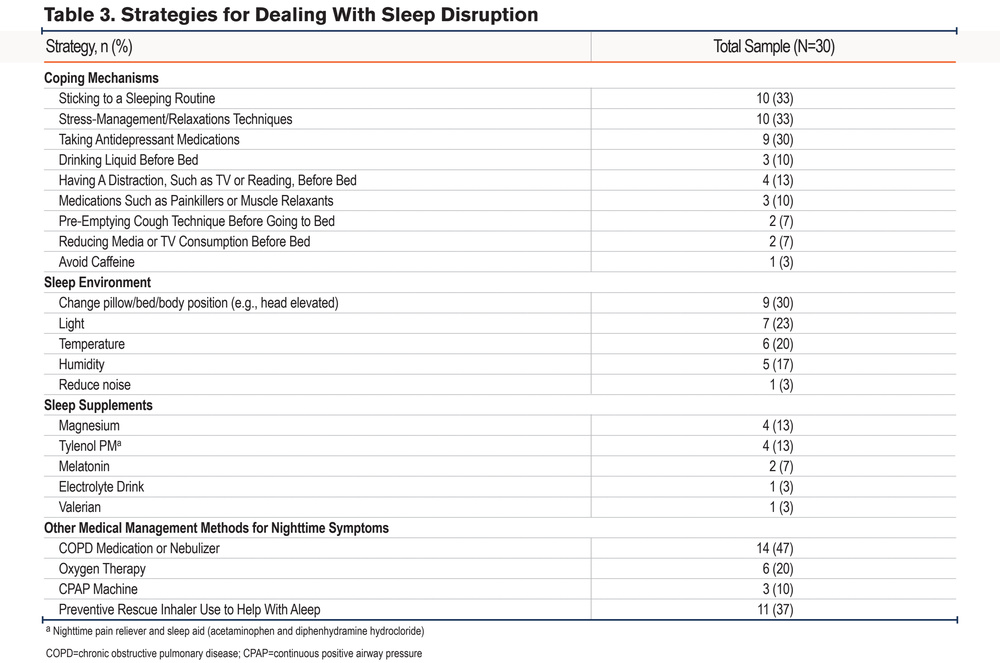
To manage sleep disruptions, participants most commonly relied on consistent sleep routines (33%), sleep hygiene, and relaxation techniques such as meditation or breathing exercises (33%).
- Patient 14, GR2: "I just stick to a routine. I go to bed at a certain time."
- Patient 15, GR2: "I do acupuncture every single Monday, and that gives me one hour a week to relax and reset and just get grounded. And during that hour of acupuncture, I listen to this meditation, a Deepak Chopra, something the acupuncturist puts on me…So on those nights when I have difficulty falling back to sleep, when I wake up in the middle of the night, what I do in my head is I start listening to the chakras."
- Patient 35, GR3: “For the sleep, and then, I'll listen to YouTube. I listen to frequencies, like the 528, 423 frequency, the theta waves, binaural beats delta waves. Anything that'll make me sleep.”
- Patient 03, GR2: “Most of the time, I can talk myself out of it. I don't know if that makes sense, but I'm like, relax, relax, relax, relax. And I, like, meditate myself out of it.”
Around one-third (30%) used non-COPD medications, mainly antidepressants, to support sleep.
- Patient 10, GR3: "With the sleeping, the amitriptyline. That is what I totally give all credit to that. Because I guarantee if I didn't pay, if I wouldn't take it, it would be bad. It would be like 18 hours up, and the other hours very, very, very restless."
- Patient 16, GR3: "I just got a dosage of hydroxyzine, increased to 50 milligrams because the 25 milligrams wasn't working. They also got me on melatonin as well."
- Patient 40, GR1: “I'm on medication for my mental health and he's trying to help my sleeping.”
Inhaler device use was common: 83% reported using a rescue inhaler at night, with more than half describing them as very effective, and some (37%) used them preventatively before bedtime.
- Patient 23, GR3: “Sometimes I use it before I go to bed. I'm not very good at keeping track of when the last time it is, I used it. ...I'll do it, so that I don't wake up in the night all winded. Because if I don't use it, I definitely have exacerbations.”
- Patient 15, GR2: “I find I need it more at night, for example, when I had to walk up the sixth flight of stairs, ... Like, I feel like I need it, but I don't want to get up…at night, when I'm laying there, and then I, I guess I said earlier, I think everything just kind of settles, and then it comes up at night.”
- Patient 31, GR3: “I think I notice symptoms more at night, and also just because I know it'll probably help me sleep a little better.”
Additional management strategies included nebulizer use (47%), oxygen therapy (20%), and CPAP machines (10%).
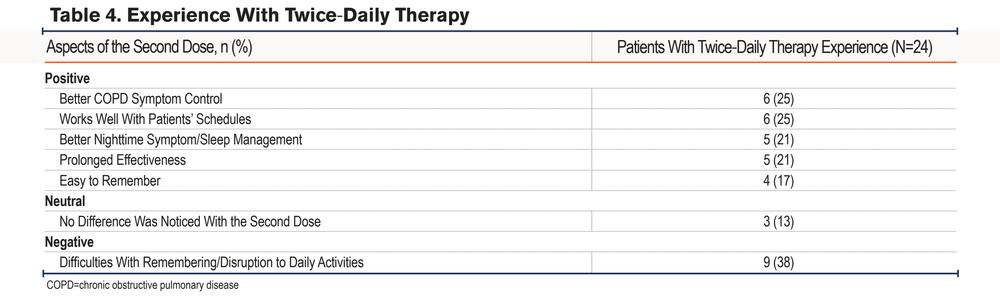
Table 4 summarizes participant experiences with twice-daily maintenance therapy among those with existing and/or prior exposure to a second daily dose (80%). Participants described a number of perceived benefits from the second daily dose, including improved symptom control (25%), better sleep (21%), and prolonged effectiveness (21%). Smaller proportions (13%) reported feeling no noticeable changes, and some participants described challenges, such as difficulty remembering the second dose or disruptions to daily routines (38%).
- Patient 09, GR1: “Yes [the second dose provides additional relief] because I'll cough more without it. [The twice-daily] totally helped with my coughing that is what made my coughing manageable. So, if I don't do that nighttime dose, I wake up crappy in the morning, and I'm sluggish, and I don't know. It does something. I'm better if I do 2 doses.”
- Patient 57, GR1: “I don't get exacerbations. And to me that's very important because I don't want to go back to the hospital. I don't like being in the hospital, so controlling exasperations is very important to me.”
- Patient 35, GR3: “[The twice-daily] gets you through the day and night.”
Discussion
This study provides in-depth insight into the nighttime symptom experiences of symptomatic patients with COPD receiving single-inhaler dual or triple maintenance therapy. The findings suggest that nighttime symptoms represent a considerable burden to these patients and may impact daily functioning and quality of life. The SMT22 provided the guiding conceptual framework for interpreting these findings, situating nighttime symptoms within the dynamic relationship between symptom experience, management strategies, and outcomes.
Nighttime symptoms in this study encompassed evening, night, and early morning manifestations, most participants reporting CASIS scores indicative of considerable nighttime symptom burden and sleep disruption. These findings align with prior studies, including the ASSESS study, which similarly demonstrated high nighttime symptom burden among patients with COPD.16 Participant narratives emphasized that symptoms were often perceived as more severe at night, using descriptions such as distressing, persistent, and difficult to control. Dyspnea, cough and mucus production disrupted sleep and were physically and emotionally taxing.
Consistent with prior evidence, nocturnal symptoms were perceived to contribute to frequent awakenings, difficulty initiating and maintaining sleep, and reliance on rescue or nebulized medications during the night.9-15 Within the SMT framework, findings reflect a heightened symptom experience beyond physical symptoms, including emotional responses such as anxiety or fear related to breathlessness. Nearly all participants reported physical consequences of nighttime symptoms, and 4 out of 5 reported reduced sleep quality, consistent with prior literature showing pervasive daytime fatigue and impaired functioning.9,11,12,15,25
Emotional and psychological consequences were commonly reported and appeared clinically meaningful, with patients describing nocturnal anxiety, panic related to breathlessness, and anxiety attacks, further diminishing quality of life across physical, social, and emotional domains.9,15,26 Difficulty staying asleep or frequent awakenings emerged as the most bothersome nighttime symptom, while physical impacts were most often identified as the most burdensome consequence, suggesting that disrupted sleep may be one pathway through which nighttime symptoms affect daytime functioning.
Within the SMT framework, the findings suggest that nighttime symptom burden and inadequate symptom control extend beyond nocturnal discomfort to influence functional outcomes and daily behaviors. Activity avoidance emerged as a salient symptom outcome, with participants describing reduced participation in social activities, household tasks, and physical exertion. Such avoidance may contribute to progressive physical deconditioning and reduced independence, reinforcing a cyclical relationship between symptom burden and functional limitation in COPD.
Participants described a wide range of symptom management and coping strategies aimed at mitigating symptoms and improving sleep. Behavioral adaptations, such as structured sleep routines and a controlled sleep environment (e.g., adjusting sleep positioning, lighting, and temperature), were commonly reported and have been described in prior research as beneficial for improving sleep quality and symptom relief.27-29 These strategies reflect the adaptive efforts and active patient engagement in symptom self-management.
Pharmacological management was also frequently employed. Approximately one-third of participants reported using antidepressant medications to aid sleep, with some also using supplements like melatonin, both of which have been shown to have potential effects on sleep latency or sleep quality.30 Notably, limited prior research has examined real-world sleep management strategies among individuals with COPD, particularly from the patient perspective. The present findings, therefore, add insights into how patients combine prescribed treatments with self-initiated strategies to manage nighttime symptoms in COPD.
The findings of the current study suggest that participants used a comprehensive and individualized approach to sleep management, which integrates behavioral, complementary and integrative approaches, and pharmacological strategies. Participants described actively balancing clinician-directed treatment plans with self-management behaviors and taking an active role in their sleep management. Clinicians may wish to consider that patients often engage in substantial self-management efforts alongside prescribed therapies to address nighttime symptoms.
Inhaler use was commonly mentioned as a symptom management strategy; one-third of individuals used rescue inhalers preventively at night, while others relied on maintenance therapy, particularly twice-daily regimens, which some participants perceived to be beneficial for nighttime symptom control and sleep outcomes. These observations are consistent with prior studies suggesting that extended-dosing regimens may contribute to nighttime symptom control.31,32
Despite longstanding recognition of nighttime symptom burden, the GOLD report,17 as of the 2025 edition, still lacks explicit recommendations for managing sleep disturbance or nighttime COPD symptoms. Findings from this study support further consideration of nighttime symptoms in clinical care and may help inform future guideline development and recommendations to address the full 24-hour symptom experience in COPD.
Limitations
The sample size and homogeneous composition of the sample impose constraints on the generalizability and transferability of findings. Although efforts were made to ensure an equal number of participants within the 3 groups, the limited number of participants per group does not allow for group-specific conclusions. Another limitation is that it was not always possible to distinguish whether impacts, such as reduced sleep quality or emotional effects, were primarily driven by nighttime symptoms or the overall burden of disease and treatment. This may have influenced the accuracy of data on nighttime-specific experiences. The eligibility criteria may also limit the transferability of the findings. Requiring a CAT score of ≥10 and current single-inhaler dual or triple maintenance therapy selected a symptomatic population with persistent burden despite maintenance treatment. Consequently, the nighttime symptoms and associated impacts reported may be more pronounced than those experienced by people with lower CAT scores, milder COPD, or different treatment profiles. The findings are most applicable to symptomatic patients receiving single-inhaler dual or triple therapy. The exclusion of open triple therapy means that the findings may not reflect the treatment burden associated with managing multiple inhalers. The findings may also have limited applicability to patients receiving single-bronchodilator regimens or newer maintenance options such as ensifentrine. A detailed exacerbation history was not collected beyond confirming the absence of a severe exacerbation resulting in hospitalization or an emergency department visit during the previous 12 months. The relationship between prior exacerbation burden and the reported nighttime experiences, therefore, could not be assessed.
Conclusions
This study suggests that nighttime symptoms represent a substantial burden in COPD among symptomatic patients receiving single-inhaler dual or triple maintenance therapy. Patients described persistent nighttime symptom distress and relied on a combination of pharmacological, complementary, and integrative approaches to manage nighttime symptoms, indicating both adaptive self-management and areas where additional support may be needed. These findings highlight the potential value of a more systematic assessment of nighttime symptoms, comprehensive and early patient education, and integration of multidisciplinary care to support COPD management across the full 24-hour cycle. Clinicians may wish to consider nighttime symptoms as part of COPD care and tailor management discussions to individual symptom patterns, treatment needs, and dosing schedules where clinically appropriate.
Acknowledgements
Author contributions: All authors—SM, HDG, MB, NF, RL, KH, CK, KW, DK, TT, and GJC—were involved in the conception and/or design of the study, reviewing the article and approval of the final manuscript. TT, DK, and KW were involved in data acquisition, data analysis, and interpretation. SM and HDG were involved in data interpretation and writing of the article. Medical writing assistance, under the guidance of the authors, was provided by Colin Lightfoot for this manuscript, in accordance with Good Publication Practice 2022 guidelines.
Data Sharing Statement: No data are available. Data are not available as no consent was sought from patients to allow sharing of data with third parties.
Declaration of Interest
HDG, MB, NF, and RL are employees of AstraZeneca Pharmaceuticals LP and hold AstraZeneca stock. GJC has received grants/contracts and consulting fees from AstraZeneca, GSK, Chiesi, Boehringer Ingelheim, Pulmonx, and Apreo. He has also received consulting fees from Intuitive and Uniquity. He is part of an advisory board for Chiesi and Sanofi Regeneron. SM has received funding and consulting fees from AstraZeneca as well as grants from the National Institutes of Health and the National Institute for Nursing Research. She is also the current South Carolina State Captain for the COPD Foundation. KH and CK are patient participants and receive consulting fees and financial assistance for meetings/travel from the COPD Foundation. DK, KW, and TT are employees of Kielo Research, which received fees from AstraZeneca related to this work. TT holds stock in Kielo Research.